
-
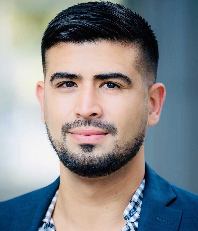
Fabian Rivera-Chávez, PhD
Assistant Professor, Department of Pediatrics, Department of Molecular Biology, University of California, San Diego
About the Awardee: Fabian Rivera-Chávez, PhD, is an Assistant Professor of Pediatrics and Molecular Biology at UC San Diego. He completed his PhD in Microbiology at UC Davis, where he studied how inflammation and antibiotics change the gut environment in ways that favor enteric pathogens, and then trained as a postdoctoral fellow at Harvard Medical School, where he discovered that cholera toxin alters gut metabolism to promote Vibrio cholerae growth. His laboratory now investigates how bacterial toxins reshape intestinal metabolism, immune responses, and interactions with the gut microbiota, with an emphasis on identifying host pathways that can be targeted to treat or prevent diarrheal diseases. He is particularly interested in how toxin-producing bacteria and early-life antibiotic exposure disturb beneficial gut microbes and protective immune pathways in the small intestine, and how these can be restored using gut-directed therapies.
Project Title: Mechanisms of Immune–Metabolic Disruption by Bacterial Toxins in the Neonatal Gut
Summary: Diarrheal diseases remain a leading cause of hospitalization and death in young children worldwide. While oral rehydration therapy saves lives, many children still lack access to healthcare. This project addresses the gap by defining how bacterial toxins alter gut metabolism
and immune responses, providing a foundation for new therapies that target these pathways. Understanding these gut-specific pathways will reveal how early-life antibiotics and toxins increase disease risk and will provide a roadmap for future strategies to treat or prevent severe
diarrhea in children. -

Miguel Reina-Campos, PhD
Assistant Professor, Pharmacology Department, La Jolla Institute for Immunology
About the Awardee: Dr. Miguel Reina-Campos is an Assistant Professor at the La Jolla Institute for Immunology, where he leads the Laboratory of Tissue Immune Networks. His research dissects the functional design of CD8 T cell tissue immunity to reveal how these cells achieve durable protection against infection and cancer. Integrating in vivo genetics, metabolomics, and advanced spatial transcriptomics in mouse and human systems, his team maps the metabolic and spatial logic of tissue-resident memory CD8 T cells. Trained in Barcelona and the Scripps Research Institute, Dr. Reina-Campos earned his Ph.D. at Sanford Burnham Prebys and completed postdoctoral studies with Dr. Goldrath at UC San Diego. He is a La Caixa Fellow, Cancer Research Institute Fellow, and co-founder of TCura Bioscience.
Project Title: Understanding T Cell Adaptations to a Two-Front Nutrient Supply Environment
Summary: Diet has a powerful impact on our immune system, especially in the intestine, where immune cells are directly exposed to the food we eat. We recently discovered that a key group of immune cells, called tissue-resident memory T cells, relies on specific nutrients found in the gut to stay healthy and protect us from infections and cancer. However, it is still unknown which nutrients they need from food and which can be provided through the bloodstream. This project uses a new method to separate these two nutrient sources in mice, helping us understand how diet shapes intestinal immune defenses.
SDDRC 2025–2026 Pilot/Feasibility Grants
2025–2026 Awardees
Digestive Diseases Innovative Awards ($40,000 each):
The SDDRC has awarded a new round of pilot & feasibility grants to promote innovative research in digestive diseases. This year's awardees are:
2025-2026 Awardee
Jon I. Isenberg Fellowship Award ($40,000):
The Isenberg Endowed Fellowship was jointly awarded by the Pilot & Feasibility Program of the San Diego Digestive Diseases Research Center and the Hellman Family Foundation. The fellowship, given in honor of the late Dr. Jon Isenberg 1979-1993 to promote Dr. Isenberg's lifelong research interests including intestinal epithelial ion transport mechanisms, mucosal defense, peptic ulcer disease, and cystic fibrosis, as applied to the intestine, liver, and biliary system.-
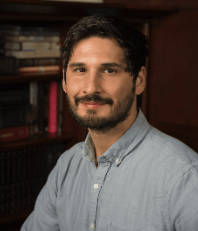
Guillaume Urtecho, PhD
Assistant Professor, Division of Gastroenterology and Hepatology, UC San Diego
About the Awardee: Dr. Guillaume Urtecho is an Assistant Professor in the Division of Gastroenterology & Hepatology at the University of California, San Diego. He received his PhD in Molecular Biology from UCLA and completed his postdoctoral training at Columbia University Irving Medical Center. Dr. Urtecho is committed to advancing our understanding of microbial communities in the mammalian gut and developing innovative strategies to engineer them for improved health outcomes. By integrating approaches from Systems Biology, Synthetic Biology, and Microbial Ecology, he seeks to unravel the complex interactions within gut microbiomes and apply these insights to design therapeutic consortia and next-generation therapies.
Project Title: Exploring the Microbial Determinants of Region-Specific Inflammation in Crohn’s Disease
Summary: Crohn’s disease affects different parts of the intestine in different people, making it challenging to prescribe and predict the response of treatments. This project explores how gut bacteria contribute to inflammation in the small versus large intestine, and whether bacteria that reduce inflammation in one mouse model can do so in another. We will combine gut microbiome, metabolic, and immune data from different regions of the gut to find patterns that identify triggers of inflammation. This work will help design better bacteria-based therapies for
Crohn’s disease.